
Arkansas’s Trusted Utility Drilling Contractor
Underground utility installation is high-stakes work, where a single drilling error can sever a live line and stall an entire project. As a utility drilling contractor Arkansas teams trust, Randy Carter Construction pairs precision drilling with a safety-first approach that keeps buried infrastructure intact. From directional boring and hydrovac excavation to underground utility locating and utility excavation, we deliver the dependable results that make us a leading underground utility construction company Arkansas developers and contractors rely on.

Utility Drilling
Underground Utility Construction Services in Arkansas
Randy Carter Construction delivers full-service underground capabilities, from directional boring and utility drilling to hydrovac excavation, underground utility locating, and utility excavation.
We partner with contractors, developers, municipalities, utility providers, and large-scale infrastructure projects across the state, handling every phase with precision and accountability. Whether the job calls for trenchless installation or careful open excavation, our crews bring the right method to each site. Explore our core services below.
- directional boring
- hydrovac excavation
- underground utility locating
- utility excavation
- concrete scanning
Directional Boring & Utility Drilling Services
Traditional trenching takes a heavy toll on the surface above. Cutting an open trench across a site tears up roadways, destroys landscaping, and forces lane closures that snarl traffic for days. The cleanup is rarely cheap either, since restoration costs pile up alongside extended project timelines that keep crews and equipment tied to a single job far longer than necessary.
Directional boring and utility drilling sidestep nearly all of that. As an underground utility contractor Arkansas teams rely on, we install lines beneath the surface without breaking ground along the entire route. Our HDD drilling services Arkansas crews provide guide each bore around existing obstacles, while trenchless utility installation Arkansas projects depend on keeps disruption to a minimum. The result is a faster, cleaner job that protects everything above it, which is exactly why developers choose us as their utility drilling contractor Arkansas projects can count on.
Utilities commonly installed using utility drilling:
- Fiber optic cable
- Gas lines
- Sewer pipes
- Water infrastructure
- Electrical conduit
- Telecom infrastructure
Hydrovac Excavation Services
Hydrovac excavation is a non-destructive digging method that removes soil without ever putting a blade in the ground. A pressurized water stream breaks the earth apart while a powerful vacuum extraction system lifts the resulting slurry into a holding tank, leaving a clean, controlled excavation behind. Because the process loosens soil rather than tearing through it, hydrovac excavation services in Arkansas give crews precise command over depth and width on even the most congested job sites.
Contractors choose hydro excavation Arkansas crews provide over backhoes and trenchers for one simple reason: control. Mechanical equipment cannot feel a buried line before it strikes one, but pressurized water can expose a gas main or fiber bundle without making contact at all. That precision translates directly into safer work around buried utilities, far less infrastructure damage, and cleaner excavation areas that take less time to restore. The payoff is faster, more reliable utility exposure services Arkansas projects depend on to keep schedules and budgets on track.
Common applications:
- Potholing utilities
- Exposing buried infrastructure
- Excavation in confined areas
- Daylighting utilities
- Utility verification
Underground Utility Locating Services
What lies beneath a job site is rarely obvious, and guessing carries serious consequences. A misplaced shovel can strike a gas line and trigger an evacuation, slice through fiber optics and knock out service for an entire neighborhood, or contact an energized cable and put a crew in real danger. Each of those outcomes brings the same costly aftermath: emergency repairs, regulatory scrutiny, and construction delays that throw the whole schedule into question.
A professional locate is a methodical process, not a quick scan. Technicians start with electromagnetic locating equipment to trace conductive lines, then bring in ground penetrating radar to map non-conductive pipes, voids, and unexpected obstructions. Signal transmitters are applied to specific utilities to pinpoint their exact path, and every finding is translated into clear surface utility markings that guide excavation and drilling crews with confidence. The same ground penetrating radar technology also powers our concrete scanning work, giving private utility locating Arkansas clients a single team to call whether the target is buried in soil or embedded in a slab.
Utilities commonly located:
- Gas lines
- Electrical cables
- Telecom lines
- Fiber optics
- Water infrastructure
- Sewer systems
Underground Utility Excavation
Trenchless methods have transformed how utilities go into the ground, but they cannot do every job. Installing new infrastructure, repairing failed utilities, replacing damaged lines that can no longer be relined, and upgrading aging municipal systems all demand the full visibility that only excavation provides. As an underground utility excavation contractor Arkansas clients depend on, we know precisely when to set the bore aside and open the ground.
Knowing when to excavate is only half the equation; doing it safely is the rest. Our utility excavation contractors Arkansas teams trust combine accurate locating, careful soil management, and proper shoring to protect crews and surrounding infrastructure, the same discipline we bring to every job as an underground construction contractor Arkansas developers and municipalities rely on.
Common applications:
- Water line installation
- Sewer line replacement
- Electrical conduit installation
- Drainage improvements
- Municipal infrastructure upgrades
What is
Utility Drilling?
Utility drilling is a method of installing pipes, cables, and conduit underground without digging a long open trench. Instead of excavating the surface from one end of the route to the other, crews drill a path beneath it and pull the new utility line through. The ground above, including roads, lawns, and sidewalks, stays largely untouched.
The most common form is horizontal directional drilling, or HDD. The process starts with a steerable drill head that bores a small pilot hole along a planned underground path, with operators tracking its depth and direction the entire way. Once the pilot reaches the exit point, a reamer widens the hole to the size needed, and the utility line is pulled back through the finished bore. The result is a clean installation that navigates around existing utilities and beneath obstacles that open trenching cannot easily cross.
Common utility drilling applications:
- Roads
- Highways
- Driveways
- Rivers
- Sidewalks
- Landscaping
- Commercial developments
Utility Drilling vs Traditional Trenching
Before breaking ground on any installation, contractors weigh utility drilling vs trenching Arkansas projects can choose between, because the method sets the tone for the entire job. The comparison comes down to a handful of factors that shape cost and outcome alike. Trenching tears open the surface and leaves behind extensive restoration work, while drilling slips beneath it with minimal disruption.
Drilling also tends to move faster on developed sites, carries a lighter environmental footprint by sparing soil and vegetation, and trims the restoration costs that pile up when roads and landscaping have to be rebuilt. When contractors map out long-term efficiency, the boring vs trenching decision often favors trenchless utility installation Arkansas crews can complete with less mess, fewer delays, and a smaller bill at the end.
| Method | Surface Disruption | Ideal Uses |
|---|---|---|
| Directional Drilling | Minimal | Roads, rivers, landscaping |
| Traditional Trenching | Higher | Open construction areas |
Hydrovac Excavation vs Traditional Digging
Backhoes, trenchers, and excavators are built for speed and brute force, which is exactly what makes them dangerous near buried infrastructure. A steel bucket cannot sense a gas line, a fiber bundle, or an energized cable before it hits one. A single misjudged pass can rupture a main, sever communications for an entire area, or expose a crew to a live electrical strike, and the fallout often means emergency repairs, fines, and a stalled schedule. When the margin for error shrinks, the hydrovac vs digging decision becomes less about preference and more about protecting the people and systems on site.
Hydrovac excavation removes that risk by trading force for control. Pressurized water and vacuum extraction loosen and lift soil without ever touching the utilities below, which is why the hydrovac vs traditional excavation Arkansas comparison consistently favors the non-destructive approach on sensitive jobs.
- Precision excavation: crews control depth and width to the inch rather than scooping blindly
- Safer utility exposure: lines are uncovered without physical contact or strike risk
- Reduced project risk: fewer surprises mean fewer delays, claims, and emergency repairs
- Less infrastructure damage: surrounding pipes, cables, and surfaces stay intact
- Cleaner excavation sites: contained slurry and tidy work zones cut restoration time
Why Utility Locating Is Required Before Excavation
Locating buried utilities before digging is not a courtesy; it is a legal and safety obligation. Across Arkansas, excavators are required to have underground lines identified and marked before any ground is broken, and skipping that step is one of the fastest ways to turn a routine job into a crisis. Beneath a typical site runs a dense web of gas, electrical, water, sewer, and communications lines, none of it visible from the surface.
The stakes are steep. A single utility strike can ignite a gas leak, cut service to an entire area, injure workers, and trigger fines, repair bills, and shutdowns that fall squarely on the responsible contractor. That liability is why crews bring in a trusted underground utility locator Arkansas teams can rely on before work begins. Professional locating combines electromagnetic equipment, ground penetrating radar, signal transmitters, and clear surface markings to map every line, which is why developers count on excavation safety contractors Arkansas projects depend on to lead the dig.
Why Contractors Choose Randy Carter Construction
Reputation in underground construction is earned one job at a time, and Randy Carter Construction has built ours across years of work beneath Arkansas roads, developments, and municipal systems. Our crews bring deep field experience to every project, backed by specialized drilling equipment built for precise, trenchless installation. That combination of seasoned people and purpose-built machinery is what lets us take on complex bores and tight job sites that less-equipped teams have to turn down. When developers need Randy Carter Construction utility drilling on a demanding route, they get a team that has solved the problem before.
What sets us apart is the discipline behind the work. A genuine safety-first culture governs every phase, from the locate to the final backfill, and it shows in our record and our reliable project timelines. Our trenchless construction expertise spans directional boring, hydrovac excavation, utility locating, concrete scanning, and open excavation, giving clients one accountable partner for the entire scope.

Industries That Use
Utility Drilling
& Underground Construction
Underground utility work supports nearly every sector that depends on modern infrastructure. Telecommunications providers use it to expand fiber, municipal infrastructure teams for water and sewer upgrades, and commercial construction and residential development to bring utilities into new sites. Utility providers, energy infrastructure projects, and transportation work all rely on the same trenchless methods to install and maintain systems with minimal surface disruption.
Planning an Underground
Utility Installation Project
A well-run underground project moves through clear, sequential stages, and knowing them helps contractors and developers plan with confidence. It starts with a site inspection to assess conditions, access, and obstacles, followed by utility locating to map every buried line in the work zone. From there, our team develops a drilling plan that sets the bore path, depth, and method, then handles permitting so the work stays compliant from the outset. Utility installation follows, executed by crews trained in the specific technique the job demands, and a final inspection confirms the work meets specifications and code before the site is closed out.
The questions we hear most often come down to logistics. Timelines depend on scope, soil conditions, and bore length, ranging from a single shift to several days. Permits vary by municipality and utility type and are typically secured during the planning phase. On busier sites, we coordinate traffic management to keep roads moving and crews safe, and thorough site preparation up front sets the stage for efficient, predictable execution.
Safety in Underground Construction
Professional contractors reduce risk by stacking multiple safeguards rather than relying on any single one. It begins with utility locating to eliminate blind digging, followed by hydrovac exposure that uncovers lines without mechanical contact when crews work close to live infrastructure. Trenchless installation methods cut surface hazards and limit exposure to traffic, while disciplined project planning anticipates obstacles before they become emergencies. Each layer reinforces the next, which is how excavation safety contractors Arkansas projects depend on keep complex jobs incident-free.
The other half of safety is operational discipline. Strict OSHA compliance governs every phase, from trench shoring and confined-space procedures to crew training and hazard communication. Routine equipment safety checks keep drills, vacuum trucks, and excavators running within spec and away from failure points that put workers at risk. Treating underground construction safety Arkansas standards as non-negotiable is what protects crews, preserves surrounding infrastructure, and keeps every project moving toward a clean finish.
FAQs
Frequently Asked
Questions
Can utility drilling go under roads or rivers?
Yes. Utility drilling is specifically designed to install lines beneath obstacles like roads, highways, and rivers without disturbing the surface above. This makes it the preferred method for crossings where open excavation would block traffic, damage waterways, or require costly restoration.
How long does directional drilling take?
Most directional drilling projects run anywhere from a single shift to several days. Short, straightforward bores often finish in one day, while longer routes or technically demanding crossings take more time. Soil conditions, bore length, and depth all influence the final timeline.
Is hydrovac excavation safer around utilities?
Yes. Hydrovac uses pressurized water and vacuum extraction to expose buried lines without making physical contact, which removes the strike risk that comes with mechanical equipment.
How accurate is underground utility locating?
Professional locating delivers a high degree of accuracy when performed with modern equipment and trained technicians. Ground penetrating radar and electromagnetic locators allow crews to detect and mark buried lines with the precision needed to dig safely and protect existing infrastructure.
What permits are needed for underground utility installation?
Permit requirements vary by municipality, utility type, and project scope. Most projects involve a combination of local government approvals and coordination with utility owners.
What utilities can be installed using HDD drilling?
HDD drilling can install fiber optic cable, telecom lines, gas lines, water mains, sewer pipes, and electrical conduit. Its versatility makes it a standard choice for telecommunications, municipal, energy, and commercial projects alike.
Service Areas in Arkansas
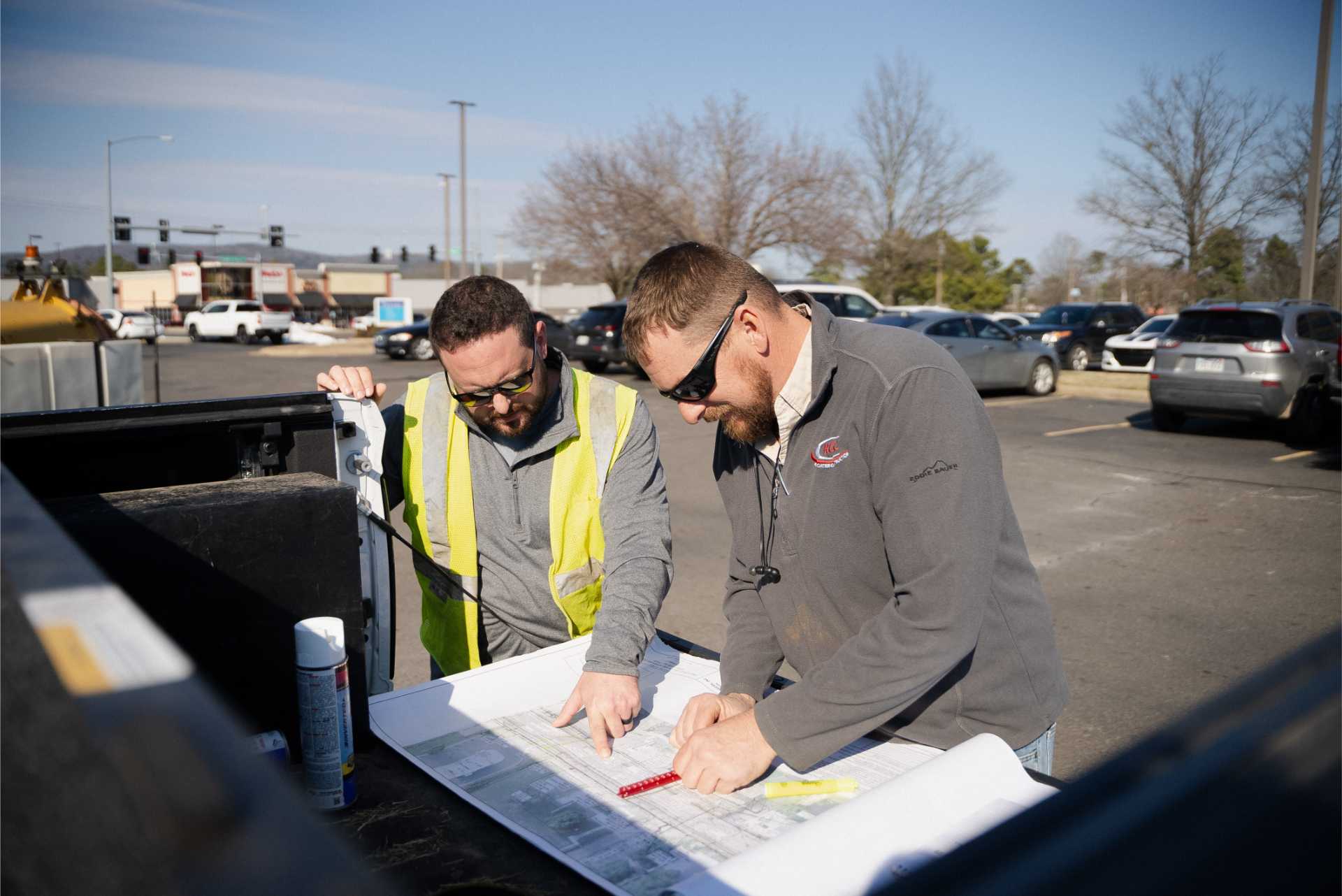
Randy Carter Construction provides underground utility services across the state, with crews regularly working throughout Little Rock and the surrounding Central Arkansas region. We extend that same coverage into Northwest Arkansas, Fort Smith, Conway, Benton, Hot Springs, and Jonesboro, supporting projects of every scale from residential developments to major municipal infrastructure. Wherever the job sits, our team mobilizes ready to deliver the precision, safety, and reliability that Arkansas contractors and developers count on.
Request a Quote
for Utility Drilling & Underground Construction
Planning your next project? Randy Carter Construction partners with contractors, municipalities, and developers across the state to deliver utility drilling services, hydrovac excavation, underground utility locating, and underground utility excavation built to keep your timeline tight and your job site safe.